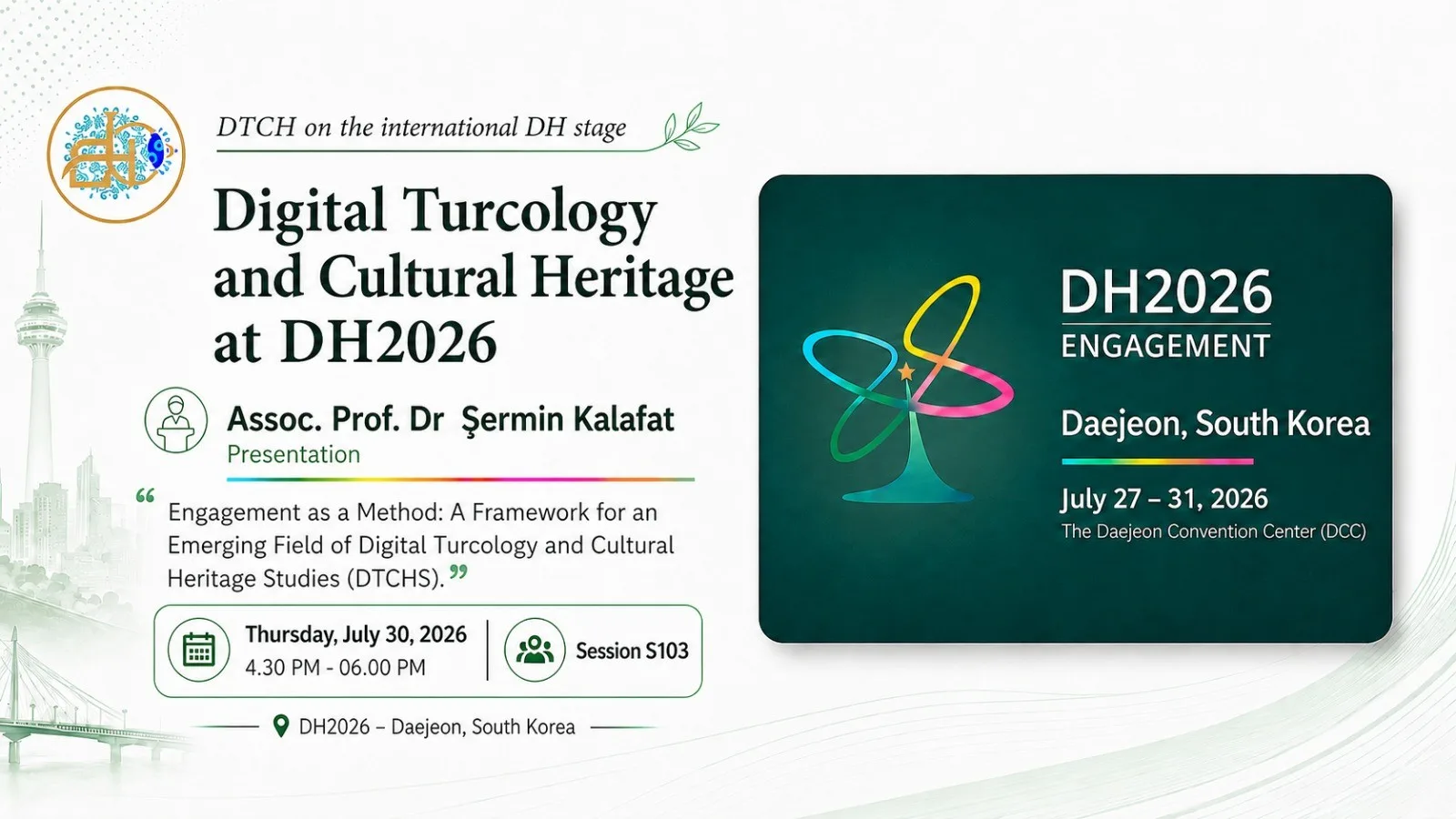
Digital Humanities 2026 (DH2026) was held in Daejeon, South Korea, from 27 to 31 July 2026 under the theme of ‘Engagement’. Assoc. Prof. Dr Şermin Kalafat, Founder and Director of DTCH, presented her paper entitled ‘Engagement as a Method: A Framework for an Emerging Field of Digital Turcology and Cultural Heritage Studies (DTCHS)’ at the conference.
Directly engaging with the conference theme, the paper examined the current state, methodological framework and distinctive principles of Digital Turcology and Cultural Heritage research, referred to more briefly as Digital Turcology. Particular attention was given to how engagement could be understood as more than an activity associated with the dissemination of research findings: as a methodological principle connected with data production, method development, collaboration with research communities and the evaluation of research processes.
The presentation also discussed the specialist profile of the digital Turcologist, why such an interdisciplinary research profile is needed in digital humanities, artificial intelligence and digital cultural heritage research, and how human resources and research capacity could be developed.
It was further emphasised that the digital transformation of Turcology extends well beyond the use of digital tools in research. This transformation encompasses a series of interconnected processes, including the preparation and structuring of research data, the development of digital methods, the critical evaluation of artificial intelligence applications, the digitisation of cultural heritage materials, the modelling and analysis of the data derived from them, the publication of research outputs and the development of new specialist profiles.
The paper stressed that Digital Turcology and Cultural Heritage research cannot be understood solely within the boundaries of digital humanities. The field was presented as an inclusive and interdisciplinary area of research that brings together digital humanities, artificial intelligence and digital cultural heritage research conducted using Turcology data within a shared methodological framework.
One of the key outcomes of the presentation was the positioning of Digital Turcology and Cultural Heritage research in relation to discussions across the DH Asia landscape, as well as its increased visibility within the international digital humanities community. The presentation showed that this field, which brings digital methods into research on Turkic languages, literatures, histories and cultural heritage, can both broaden the regional and linguistic scope of digital humanities and contribute distinctive methodological principles, evaluation criteria and research approaches to the field.
We are delighted that, following its emerging visibility within artificial intelligence communities, Digital Turcology and Cultural Heritage research is also beginning to establish a place within digital humanities communities under its own name, scope and methodological approach.