Digital Turcology and Cultural Heritage (DTCH) is an independent research platform that supports digital scholarly production, methodological exchange and evidence-based research practices in Turcology. DTCH approaches Turcology in its classical and inclusive sense, as a broad field of scholarship concerned with Turkish and Turkic language, literature, history, folklore and cultural heritage.
With digital philology at its methodological core, DTCH examines research materials ranging from texts, manuscripts and archival documents to dictionaries, audiovisual records and tangible and intangible cultural heritage elements on an evidence-based foundation. These research objects are brought into a shared digital research ecology through source information, context, explicit evidence chains and principles of reuse.
Rather than limiting digital production capacity to particular tools, the platform situates research within a sustainable, computational and data-oriented environment. Shaped by language technologies, knowledge modelling, artificial intelligence and cultural heritage data science, this methodological ground integrates digital humanities, AI and cultural heritage studies with Turcology, supporting the development of Digital Turcology and Cultural Heritage as an emerging research field. This interdisciplinary approach aims to develop digital data models, publication practices and reusable research components suited to the nature of Turcological materials.
DTCH recognises that researchers and institutions working in Turcology have different levels of digital production capacity. Through shared learning, methodological exchange and capacity building, it creates bridges between researchers, institutions and areas of expertise. Its wider aim is to contribute to the development of digital capacity in Turcology research environments in a more accessible, shareable and sustainable way.
Openness, traceability and transparency are central to DTCH's production philosophy. Outputs that comply with copyright, research ethics and data protection standards are published with open documentation, including methodological explanations, source references and version information. For further details on our working principles and how our data are handled, please see the Principles and Policies page.
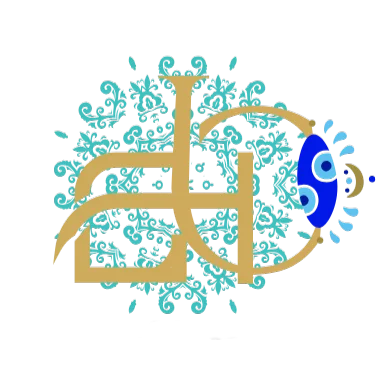
The DTCH logo brings together Turcology's established research tradition with the research horizon of the digital age within a single visual language.
The turquoise ornamentation in the design evokes shades of blue that hold an important place in Turkic cultural memory. Associated with the sky, continuity, openness, and the bond with origin, this colour ground has been conceived as a digital memory space representing the layered and living nature of cultural heritage.
At the centre, the golden monogram brings the letters of DTCH together in an elegant and coherent form. The interwoven structure of the letters represents the interdisciplinary connection established between digital research methods and Turcological knowledge. The golden tone, in turn, gives this structure a sense of scholarly value, continuity, and permanence.
The nazar motif that completes the design appears as a symbolic element associated in cultural memory with protection, attention, and care. In the DTCH logo, this motif recalls the need for cultural heritage to be preserved, approached with care, and transmitted to future generations as it moves from the past into the present. In this way, the design brings a familiar sign from cultural memory together with a digital research identity in a simple and contemporary visual form.
The DTCH logo was designed by Assoc. Prof. Şermin Kalafat.
Our mission is to bring the possibilities of the digital age together with the deep-rooted cultural heritage of the Turkic world, and to place traditional Turcological research on a next-generation, evidence-based, and sustainable foundation. The platform shapes digital research, methodological development, training, and scholarly production around four main aims.
1) To develop Digital Turcology and Cultural Heritage as a systematic research field and digital infrastructure
By bringing digital humanities, artificial intelligence and cultural heritage studies together with Turcology, we position DTCH as the methodological and technical foundation of . This foundation supports Turcology researchers in developing specialist capacity in digital philology, data modelling, AI literacy and cultural heritage data science. In this direction, our aims are to:
— To develop digital production practices in Turcology research based on source information, philological rigour, context and explicit evidence chains.
— To strengthen the principles of data management, data modelling, interoperability, methodological transparency and responsible digital research.
— To build a reusable research ecosystem for Turcology.
— To adapt existing digital and computational methods to Turcological materials and to develop field-specific methodologies.
2) Building and developing the Digital Turcologist competence profile
We work with the mission of equipping current and emerging Turcologists with contemporary computational methods, digital data modelling, and new-generation knowledge technologies, and we define this new profile around the concept of the .
A Digital Turcologist is a researcher who combines Turcological expertise with digital philology, data modelling, artificial intelligence, natural language processing and cultural heritage technologies, working on the basis of source, context and evidence chains.
As DTCH, we support the recognition, discussion, and consolidation of this innovative researcher formation in the academic world through training, open-access materials, examples of good practice, and methodological guides.
3) Strengthening evidence-based digital scholarly production and a culture of collaboration
DTCH adopts a production-oriented research approach that translates its methodological principles into concrete scholarly outputs. The digital scholarly outputs developed on the platform are prepared in a way that makes their sources, methods, decision-making processes and versions traceable. This production approach supports openness, comparability, shareability and long-term use in digital scholarly production, and aims to strengthen methodological exchange, a culture of collaboration and sustainable scholarly solidarity within the Turcology ecosystem.
4) Promoting digital and computational methods together with critical AI literacy
DTCH supports the conscious, critical and source-informed use of digital and computational methods in Turcological research. Through training sessions, seminars, workshops, practice-oriented workflows, guides, templates and sample datasets, it creates space for researchers to become familiar with new methods, evaluate them and adapt them to their own research questions. DTCH regards critical AI literacy as a core researcher competence for carrying out digital scholarly production in a responsible, informed and source-based manner.
Our vision as DTCH is to establish a pioneering digital area of specialism in Turcology that is recognised globally, trusted as a reliable point of reference and continuously developing.
In this direction, we aim to build the academic ecosystem of the future on the following foundations:
— Sustainable and visible heritage: To transform the tangible and intangible heritage of the Turkic world into reference resources that are more visible, comparable, documentable and suitable for long-term scholarly use in the digital age.
— Depth and technological integration: To create an environment that preserves the philological, historical and cultural depth of research materials while establishing strong and sustainable connections with digital humanities, artificial intelligence, data science and cultural heritage research infrastructures.
— Open scholarly ecosystem: To build a transparent scholarly network in which researchers develop a shared methodological language, gain critical digital awareness and openly share evidence-based production practices.
— Next-generation researcher profile: To develop the Digital Turcologist competence profile into an innovative researcher formation that is recognised, discussed and adopted in the academic world.
Collaborations
Institutional Collaborations

Award / Funding Collaborations